 +44(0)1865 891466
Labour Challenges in the Bottling and Capping Industry: Reducing Skills Gaps Through Smarter Engineering
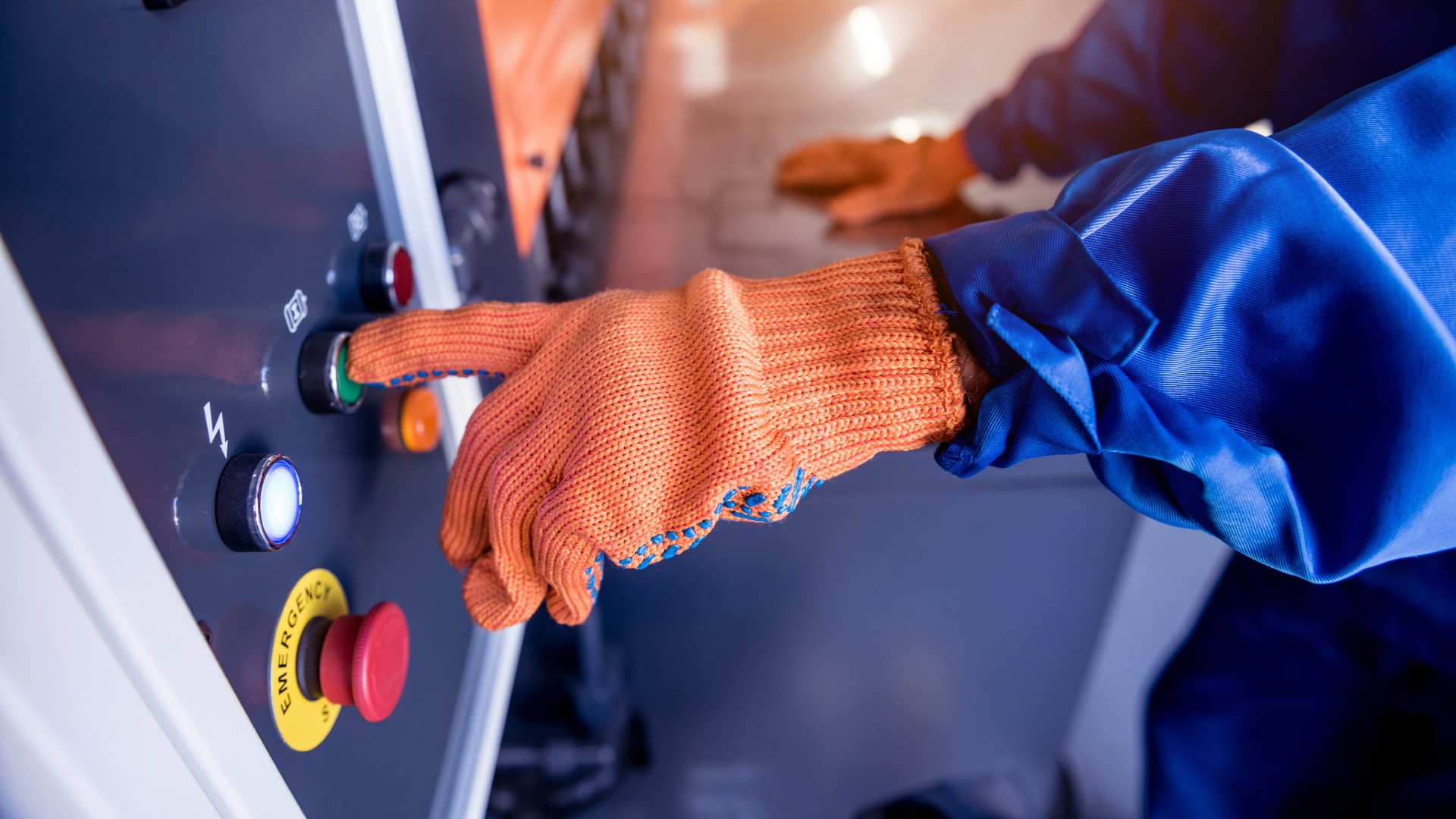
Labour challenges in bottling and capping are reshaping production across pharmaceuticals, healthcare, the life sciences, and other high-throughput sectors. Skilled operators are becoming harder to recruit, more expensive to retain, and increasingly difficult to train at scale. At the same time, packaging complexity is rising.
The result? Bottling line labour shortages are no longer just an HR issue, they are a direct threat to production stability, compliance, and profitability. Manufacturers are beginning to recognise that the long-term solution does not lie solely in recruitment. It lies in engineering systems that reduce operator dependency and protect performance regardless of who is on shift.
Why Bottling and Capping Lines Are Facing Labour Shortages
The packaging sector is experiencing a widening skills gap driven by three major forces:
Skilled technicians are increasingly scarce
Modern filling and capping lines are far more sophisticated than they were a decade ago. Digital torque control, automated inspection, serialisation, integrated vision systems, all these technologies demand technical understanding. Yet fewer operators are entering the industry with mechanical or engineering backgrounds.
Many manufacturers report that:
- Capping machine operator training now takes months rather than weeks
- Experienced technicians are frequently poached
- Recruitment pipelines struggle to keep pace with automation growth
As automation in the bottling industry advances, the expectation of operator competence rises, but the labour market has not expanded accordingly.
High turnover increases production risk
Sectors such as cosmetics, supplements, and dairy often rely on seasonal or temporary labour. While flexible staffing solves short-term volume challenges, it creates long-term inconsistency.
High turnover contributes to:
- Inconsistent machine setup
- Incorrect torque settings
- Increased operator error in packaging
- Higher reject rates
- Avoidable downtime
When knowledge is stored in individuals rather than embedded in equipment, production performance becomes vulnerable.
Packaging complexity is accelerating
SKU proliferation, tamper-evident closures, sustainability-driven packaging changes, and smart caps are all increasing mechanical complexity. Operators are expected to manage more variables than ever before, often with less experience and less time for structured training. This is the heart of today’s packaging line skills gap: complexity is growing faster than workforce capability.
The Growing Packaging Skills Gap (And What It Means for Production)
Labour challenges in bottling and capping are not temporary fluctuations. They represent a structural shift in the workforce.
For production managers, this creates three pressing concerns:
- How to maintain filling and capping line efficiency with fewer skilled operators
- How to reduce operator error in regulated environments
- How to protect output when experienced staff are unavailable
The answer increasingly lies in system design. Rather than asking operators to carry the technical burden, modern engineering must shoulder more of the responsibility.
How Engineering Reduces Operator Dependency
Forward-thinking manufacturers are redesigning bottling and capping systems around one core principle: Remove subjectivity. Embed repeatability. Guide the operator. Several design strategies are proving essential in reducing labour dependency on bottling lines.
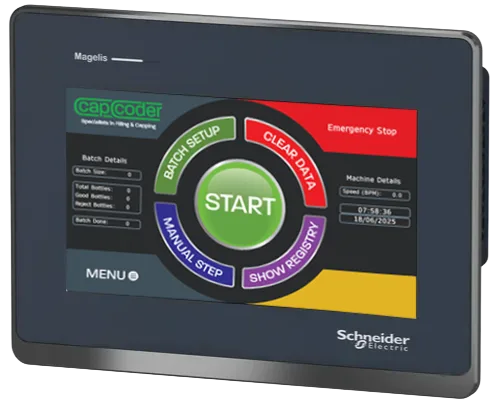
1. Guided, Intuitive Interfaces
The human–machine interface is one of the most common sources of error. Clear workflows, logical menus, protected parameters, and on-screen prompts dramatically reduce training requirements. Instead of relying on memory or the (sometimes false) perception of shared knowledge, the system guides the operator step by step. Effective interface design shortens capping machine operator training time and supports more consistent setup across shifts.
2. Mechanically Repeatable Adjustments
Older equipment often relied on arbitrary judgement: “Tighten until it feels right.” Or “Adjust slightly if it looks off.” Modern systems eliminate guesswork through:
- Precision torque heads
- Digital torque feedback
- Indexed adjustments
- Mechanical stops
- Self-centring bottle handling
By removing subjective decision-making, manufacturers significantly reduce operator error in packaging operations.
3. Simplified, Fast Changeovers
In many facilities, product changeovers occur more frequently than operator shifts. When that happens, the machine must effectively act as the expert. Tool-free change parts, colour-coded components, modular assemblies, and indexed settings ensure repeatable setup, even with inexperienced staff. This is one of the most effective ways to improve filling and capping line efficiency despite workforce instability.
4. Built-In Inspection and Automatic Detection
Manual oversight is no longer enough. Integrated torque monitoring, cap presence checks, tamper-band verification, and misalignment detection allow systems to identify issues immediately. Early detection prevents waste accumulation and reduces the pressure on operators to spot subtle faults. Built-in inspection is becoming central to solving labour shortages in packaging manufacturing because it transfers quality control from people to process.
5. Integration That Reduces Cognitive Load
Modern packaging lines may include printers, serialisation modules, vision systems, and data capture tools. Without thoughtful integration, operators must manage multiple interfaces simultaneously. Unified controls, harmonised start/stop logic, and simplified troubleshooting significantly reduce training complexity and protect performance. In an environment of bottling line labour shortages, reducing cognitive load is critical.
Designing Bottling Equipment for Workforce Stability
Labour challenges in bottling and capping are unlikely to reverse soon. As automation increases and packaging evolves, the skills required will continue to rise.
Resilient production lines share common characteristics:
- Repeatable mechanical design
- Embedded quality control
- Structured documentation and validation support
- Minimal reliance on operator “feel”
- Reduced setup variability
Equipment manufacturers, are increasingly adopting this design philosophy, focusing on engineering systems that maintain stability regardless of workforce fluctuations. The aim is not to replace operators; it is to support them. And Cap Coder machinery, with built in expertise, is well positioned meet these growing requirements
FAQs
Manufacturers can reduce labour dependency on bottling lines by investing in equipment that embeds expertise into the system. Features such as guided HMIs, precision torque control, tool-free changeovers, and built-in inspection reduce operator error and minimise the need for highly specialised training.
The main labour challenges in bottling and capping include skilled operator shortages, high staff turnover, increasing packaging complexity, and longer training periods. As automation advances, the technical demands on operators increase, widening the packaging line skills gap and making production more vulnerable to workforce instability.block. Use this space for describing your block. Any text will do. Description for this block. You can use this space for describing your block.
Automation in the bottling industry helps solve the packaging skills gap by reducing reliance on manual judgement. Integrated torque monitoring, cap detection systems, and repeatable mechanical adjustments ensure consistent performance, even when operator experience varies.
Automation as a Long-Term Response to Labour Challenges
Automation in the bottling industry is no longer just about speed. It is about resilience. By embedding expertise directly into machinery, manufacturers can:
- Reduce labour dependency on bottling lines
- Protect output during staff turnover
- Improve consistency in capping operations
- Maintain compliance in regulated production
- Future-proof operations against ongoing workforce challenges
The most sustainable response to the packaging line skills gap is not reactive hiring. It is proactive engineering. Because in today’s manufacturing environment, production stability must be designed into the system, not dependent on the perfect operator being available.
Concerned about labour challenges on your production line? Get in touch and let’s explore how to build more stability into your operation.
Ready to Boost your Productivity?
Get in touch today and one of our friendly sales engineers will be in contact shortly.