 +44(0)1865 891466
How to Choose the Right Filler Machine: A Practical Guide for Manufacturers

When you’re scaling up production, choosing the right filler machine isn’t just a box to tick, it’s a decision that shapes your efficiency, compliance, and profits. Whether you’re bottling delicate pharmaceutical serums, silky cosmetic lotions, robust healthcare solutions, or even the occasional foaming shampoo, the filler you choose can mean the difference between smooth sailing and constant headaches.
Get it right, and your production line hums like a perfectly oiled machine. Get it wrong, and you’ll be drowning in downtime, product waste, compliance issues, and the kind of chaos that even a double shot of cough syrup couldn’t cure. So how do you really make the right choice? Let’s break it down, step by step.
Step 1: Know Your Product
For the best filling machine selection, start with the star of the show – your product. Liquids come in personalities, some are as easy-going as water, others as stubborn as honey, and some even come with added extras (like exfoliating scrubs with beads). This is why product behaviour makes or breaks your choice:
- Thin Liquids (like eye drops, spirits, or disinfectants): For lab-style precision, syringe pumps can handle fills as small as 0.05 µL up to 500 µL. The CC570 Filler and Micro Mono are built for exactly this kind of accuracy. For slightly larger but still tightly controlled volumes, peristaltic pump fillers keep everything running smoothly.
- Thick or Viscous Liquids (serums, gels, oils, lotions): Gear pumps are the workhorses of the filling world. Two interlocking gears spin in perfect sync, pulling your liquid in and pushing it out with unwavering consistency. Gear pumps handle these liquids effortlessly, whether it’s a small batch or a full industrial line.
- Products with Particulates (think creams with beads or suspensions): These calls for piston fillers. They’re built to handle chunky or thick liquids without compromising accuracy, making them ideal for both small and large batches. Reliable, consistent, and tough, piston fillers get the job done when precision meets substance
Pro Tip: Know your product and never underestimate viscosity. Trying to push honey through a peristaltic pump simply won’t work, it’s a recipe for frustration and sticky disappointment.
Step 2: Define Your Accuracy Needs
Accuracy matters for all products. Even everyday items need consistent fills to keep customers happy and avoid waste, while high-value products demand precision down to the last drop to protect profits and stay compliant.
- Everyday Products (hand soaps, shampoos, cleaning liquids): These liquids don’t need the ultra-tight tolerances of premium pharmaceuticals, but accuracy still matters. A ±1–2% tolerance usually keeps customers happy, avoids complaints, and ensures auditors won’t raise any eyebrows. Even small overfills add up over time, so maintaining consistency is both practical and profitable.
- High-value Products (pharma serums, calibration fluids, oils, vaccines): This demands the utmost accuracy. Aim for a ±0.5% tolerance because, every drop counts, not just for revenue but also for regulatory compliance. For this level of precision, the Micro Mono Automatic is a reliable choice, helping you keep fills consistent, accurate, and stress-free.
Remember: Overfilling eats into profit, and underfilling can irritate regulators and frustrate customers. Neither outcome is ideal. But it’s not just overfilling, spillage is another hidden cost. Cheap machines often require tricky manual setups, or don’t clamp properly, which leads to messy bottles and wasted product. Our machines? Spill-free. The CC560 and Micro Mono excel at controlling spillage thanks to their starwheel design, which lets you precisely manage infeed and outfeed speeds so bottles never crash into one another.
Step 3: Think About Speed and Scale
How fast do you need to move? This is where honesty pays off. Whether you are filling a few dozen bottles for boutique batches, or supplying pallets for nationwide chains, it is vital to understand what speed and scale is required to effectively meet your production needs. From start-up to scale-up make sure your filler is matched to your growth:
- Small Batches and Start-ups: Semi-automatic or benchtop fillers are perfect for getting your production off the ground without breaking the bank. The Sigma Fill System and the Micro Mono Semi-Automatic are ideal choices here. Both systems are easy to set up, simple to operate, and flexible enough to handle multiple products. They give you precision and control at a scale that fits smaller operations, so you can focus on growing your business rather than wrestling with your machinery.
- Scale-up and Expand: Modular systems give you the flexibility to grow your production without replacing your entire line. The Sigma Fill System is perfect for this stage. Its modular design means you can add extra heads, adjust for higher speeds, or integrate additional features as your output increases. This keeps your investment future-proof while maintaining the precision and reliability you’ve come to expect.
- High Volume, Zero Headaches: When it’s all about mass-market efficiency, fully automated inline or rotary systems with conveyors are the answer. The CC570 and CC560 variants excel here, both designed as inline over-conveyor fillers. They handle large volumes with precision, keep bottles moving smoothly, and minimize downtime, perfect for meeting high-demand production targets without compromising accuracy or reliability.
Pro Tip: Know your speed and scale before you buy. Match your filler to your production needs. From semi-automatic benchtop systems for small batches, to modular setups as you grow, and fully automated inline machines for high-volume runs. Choosing the right machine from the start keeps your line efficient, your bottles consistent, and your investment future-proof.
Step 4: Cleaning and Changeovers
Running multiple products? Then cleaning and switching between runs will quickly become part of your daily routine. Skip this step, and you’ll spend more time scrubbing than producing. But with the right approach, cleaning and changeovers can be straightforward and stress-free.
- Peristaltic Pumps: Quick and easy. Simply swap out the tubing, and you’re ready for the next batch. Ideal for lines where speed and flexibility matter.
- Gear and Piston Fillers: Built tough and highly reliable, but they need more thorough cleaning. While it can be time-consuming, a proper clean ensures accuracy and prevents cross-contamination, keeping your products safe and your production line compliant.
Remember: In regulated industries like pharma and healthcare, cleaning validation is not optional, it’s a critical part of maintaining product quality and staying compliant. Getting it right from the start means you can confidently switch between products without risking contamination, production delays, or costly mistakes. Proper cleaning isn’t just about hygiene; it’s about protecting your reputation, your products, and your bottom line.
Step 5: Compliance and Validation
This one’s simple: no compliance, no business.
If you’re in food, cosmetics, or especially pharmaceuticals, your filler machine needs to meet strict standards, and that’s where we step in. As part of our sales process, we test your products to your specific filling tolerance requirements and provide a detailed report with sample figures, standard deviation, and average results. We can even share a sample report, so you know exactly what to expect. Your machine should:
- Meet Compliance Standards: Your machine should comply with all the relevant UK and EU safety and quality regulations such as the UKCA, CE, GMP, and cGMP. This ensures it’s designed, built, and tested to deliver consistent, reliable results, so you can confidently produce food, cosmetics, or pharmaceutical products while staying audit ready.
- Validation Packages for Regulated Industries: Beyond standard compliance, look for machines that come with validation support. This includes documented testing, calibration, and reporting to prove your line meets strict industry requirements. Validation packages take the guesswork out of audits and inspections, giving you peace of mind and demonstrating to customers that every batch meets the highest standards.
Expert Take: Compliance is more than a requirement; it’s a commitment to excellence. When done right, it ensures every product consistently meets the highest standards, builds confidence with clients, and reinforces trust with consumers. Staying audit-ready isn’t just about avoiding issues; it’s about demonstrating professionalism and reliability at every stage of production.
Step 6: Consider Total Cost of Ownership
From routine maintenance and spare parts to energy consumption and sustainability goals the total cost of ownership is has several facets; The sticker price is just the start. Smart buyers look at the lifetime cost of the machine, not just the upfront payment. Moreover, investing in new machinery doesn’t have to mean a large upfront cost. With our tailored leasing solutions, you can spread the cost of your equipment over manageable monthly payments. To cost the right filler machine you should factor in:
- Routine And Unexpected Maintenance Costs: We offer annual, bi-annual, or quarterly servicing, all covered under warranty for new machines within the first 12 months, keeping your line running smoothly without surprises.
- Spare Parts: If you manufacture on earth, you don’t want parts shipping from Mars. Because we machine our own components, we can reproduce them indefinitely, ensuring you always have what you need, when you need it. In addition, we provide recommended spare parts so you can minimize interruptions, keep production and reduce the risk of downtime.
- Energy Consumption: Especially important if you’re aiming for sustainability targets. Our machines can be fitted with energy monitoring options to help you measure and improve efficiency.
Cap Coder Tip: Sometimes the slightly pricier machine is the smartest investment you’ll make. Reliable components, superior engineering, and built-in support save you thousands in maintenance, downtime, and inefficiency over the machine’s lifetime. In other words, cheap thrills often end in expensive regrets. Choose with care, and your line will thank you.
Final Thoughts: More Than Just Filling Bottles
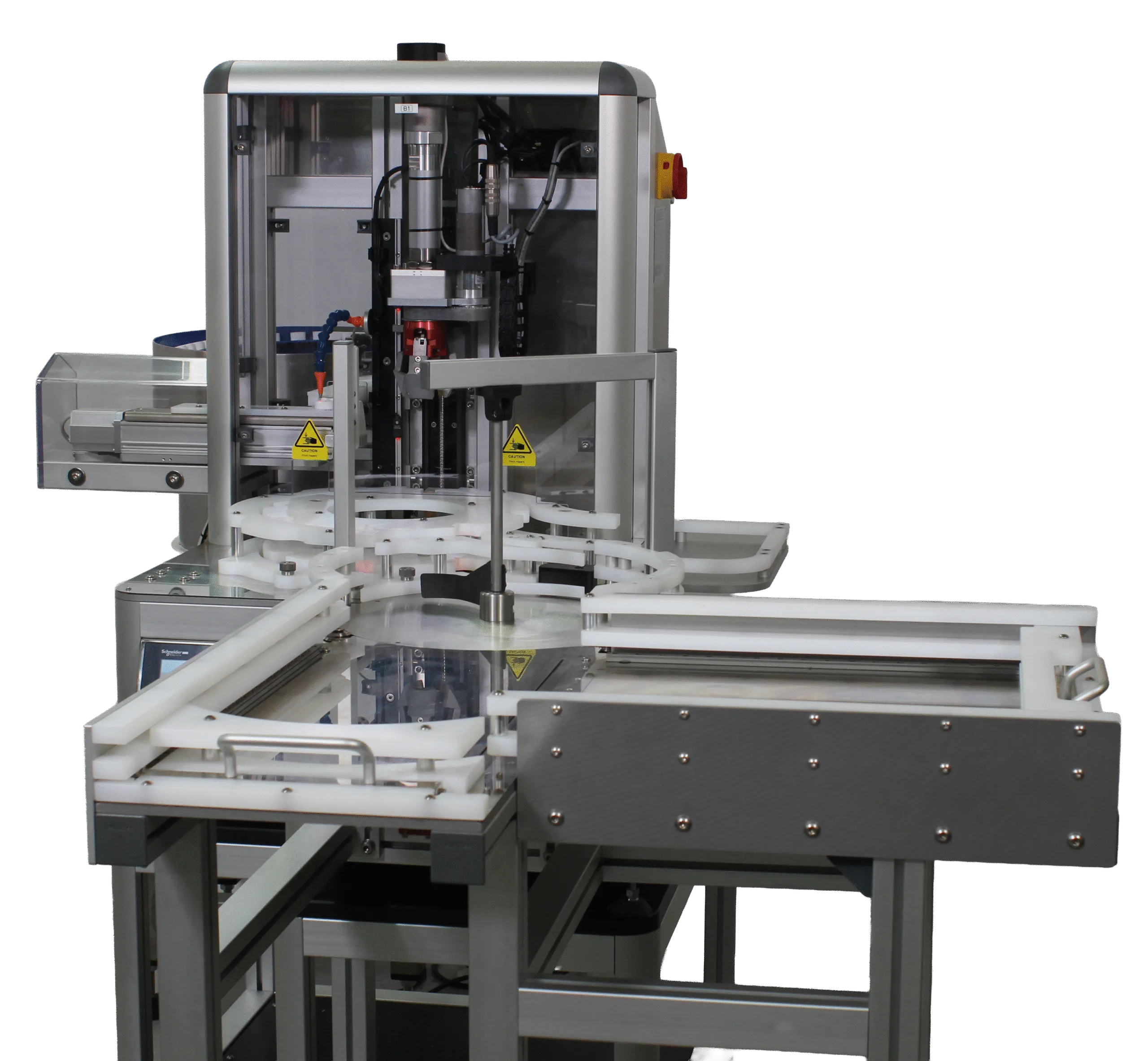
Let’s face it, choosing the right filler machine can sometimes feel like an overflow waiting to happen. It isn’t just about speed and specs, it’s about aligning your product, accuracy needs, and growth ambitions with technology that will deliver. From benchtop peristaltic fillers for boutique batches to fully automated lines for industrial scale runs, there’s a solution for every stage of your journey.
Get it right, and you’re not just filling bottles – you’re meeting orders on time, exceeding customer expectations, and boosting your profit margins.
Cap Coder: Your Expert Partner in Filling and Capping Solutions
At Cap Coder, we’ve spent decades helping manufacturers in pharmaceuticals, healthcare, cosmetics and beyond navigate the maze of filler machines. Whether you need end-to-end guidance on designing a complete production line or just a bit of expert advice on upgrading your current system, our built-in expertise means you don’t have to figure it out alone. We don’t just sell machines, we solve problems, prevent expensive mistakes, and set you up for sustainable growth. Because when your filling line runs smoothly, so does your business.
Ready to find the perfect filler for your production line? Get in touch with our experts today and let’s make it happen!
Ready to Boost your Productivity?
Get in touch today and one of our friendly sales engineers will be in contact shortly.