 +44(0)1865 891466

Which Filling Machine Technology Is Right for Your Product?

The short answer
The right filling machine technology depends mainly on your product’s viscosity, dose size and hygiene requirements. Peristaltic fillers suit thin to medium liquids, small precise doses and products where cross-contamination must be avoided. Gear pump fillers suit medium to high viscosity liquids and larger volumes. Syringe fillers suit very small, precise doses, including viscous products and fragrances.
What are the main types of filling machine?
Three pump-based filling machine technologies cover most liquid filling in pharmaceutical, life science and cosmetic production:
- Peristaltic filler: rollers squeeze flexible tubing to move a measured dose; the product only touches the tube.
- Gear pump filler: two meshing gears move product from a supply to the nozzle; the dose is set by gear rotation.
- Syringe filler: a plunger draws product into a barrel and dispenses a precise volume through a valve
Filling machine technologies compared
| Technology | Product viscosity | Typical dose size | Accuracy | Changeover and cleaning | Best suited to |
| Peristaltic | Low to medium | Small to medium (fractions of a millilitre to a few hundred millilitres) | High, especially at small doses | Fast: swap the tubing, no product-contact parts to clean | Reagents, diagnostics, sterile liquids, serums, essential oils |
| Gear pump | Low to high | Medium to large | High | Moderate: pump head strip-down and clean | Syrups, oils, lotions, creams, gels, larger containers |
| Syringe | Low to high | Very small to small | Very high | Moderate: barrel, plunger and valve clean | Precise micro-doses, viscous small fills, fragrances, vials |
Filling machine technology ranges are indicative. Achievable accuracy and speed depend on the product, container, nozzle design and machine build, so confirm with product trials.
How does a peristaltic filler work, and when should you use one?
A peristaltic filler machine technology pumps liquid through flexible tubing by compressing it with rollers. Dose is controlled by the number of pump revolutions. Because the product only touches the tubing, there are no valves or seals in the product path.
Best for: small, precise doses; sterile or aseptic liquids; reagents and diagnostic fluids; high-value serums; products where cross-contamination must be avoided.
Limitations: lower throughput per head; tubing wears and needs a replacement schedule; not suited to high viscosity or large volumes.
How does a gear pump filler work, and when should you use one?
A gear pump filler uses two meshing gears to move product from a hopper or bulk supply to the filling nozzle. A servo motor controls the gear rotation, so each dose is set precisely and can be changed from the control screen.
Limitations: more internal product-contact surfaces to clean than a peristaltic system; gear materials must suit the product’s abrasiveness and shear sensitivity; very thick pastes or products with large particulates need a trial to confirm suitability.
Best for: medium to high viscosity liquids such as syrups, oils, lotions, creams and gels; larger fill volumes; continuous runs from a bulk supply.
How does a syringe filler work, and when should you use one?
A syringe filler works like a precision syringe. A plunger draws a set volume of product into a barrel through an inlet valve, then pushes it out through the nozzle. Because it is a positive displacement method, the dose stays consistent even as viscosity varies.
- Best for: very small, precise doses; viscous products in small volumes; fragrances and oils in glass bottles and vials; high-value products where every microlitre counts.
- Limitations: lower throughput than pump systems for larger volumes; the barrel, plunger and valves need cleaning at product changeover.
How do you choose the right filling machine technology?
Start with the product, then the container, then the regulatory and production requirements. Each factor below narrows the options.
| Factor | Question to ask | Points towards |
| Viscosity | Does it pour freely, flow slowly or need pushing? | Thin to medium: peristaltic. Medium to high: gear pump. Viscous at small doses: syringe |
| Fill volume | Microlitres, millilitres or litres? | Micro-doses: syringe or peristaltic. Larger containers: gear pump |
| Accuracy | Is the product high value, or sold by declared quantity? | Servo-driven peristaltic or syringe for tight tolerances at small doses |
| Foaming | Does it foam when agitated? | Subsurface nozzles and a reduced flow rate at the start and end of the fill |
| Hygiene and contamination | Is it sterile, or must products never cross-contaminate? | Peristaltic with single-use tubing |
| Flammability | Is it solvent or alcohol based, such as fragrances or essential oils? | Designs assessed for flammable liquids under DSEAR in the UK |
| Changeover | How many products and formats run on the line? | Peristaltic for the fastest product change; servo pumps for recipe-based volume changes |
| Speed | How many containers per minute are needed? | More filling heads, or gear pumps on automatic lines |
Which filling technology suits each sector?
Pharmaceutical
Oral liquids, syrups and topical products are commonly filled with gear pump, peristaltic or syringe systems. Under EU GMP and MHRA expectations, the priority is repeatable dosing, cleanable or disposable product contact parts, and fill data that supports batch records and validation (IQ, OQ, PQ). Sterile products add aseptic requirements under EU GMP Annex 1, which favours peristaltic filling with single-use tubing.
Life and bio science
Reagents, buffers and diagnostic fluids are typically small volumes in vials or dropper bottles, often across many short batches. Peristaltic filling is the common choice because it doses small volumes precisely and removes cross-contamination risk between products. Syringe filling suits micro-doses where the highest precision is needed. Manufacturers working to ISO 13485 also need lot traceability from the filling step.
Cosmetics and healthcare
This sector covers the widest viscosity range, from toners and oils to thick creams and balms. Gear pump fillers handle creams, lotions, gels and shampoos; peristaltic fillers suit serums, toners and essential oils; syringe fillers suit small, precise doses of fragrances and viscous products in glass. Cosmetic GMP under ISO 22716 and average-quantity rules under the Weights and Measures (Packaged Goods) Regulations 2006 make accuracy and record keeping important for ℮-marked products.Start with the product, then the container, then the regulatory and production requirements. Each factor below narrows the options.
What should you tell a filling machine supplier?
A supplier can only recommend a technology accurately with these details:
- Product name, type and a safety data sheet
- Viscosity at filling temperature, and whether it changes with temperature
- Particulates, foaming behaviour and flammability
- Fill volumes or weights, and the tolerance required
- Container types, materials and dimensions, with samples
- Closure types if capping is needed
- Target output in containers per minute or per shift
- Number of products and formats, and how often they change
- Cleaning method and any sterility or contamination requirements
- Regulatory standards that apply (GMP, ISO 13485, ISO 22716) and documentation needed
Sending product and container samples for trial filling is the most reliable way to confirm the choice.
Frequently Asked Questions – FAQs
What is the most accurate type of filling machine? For small doses, syringe and servo-driven peristaltic fillers achieve the tightest tolerances. For larger volumes, servo-driven gear pumps give highly repeatable fills.
What is the difference between a peristaltic and a gear pump filler? A peristaltic filler moves product by squeezing tubing, so the product never touches the pump. A gear pump moves product between meshing gears, which handles higher viscosities and larger volumes but has more parts to clean.
What type of filling machine is best for creams and lotions? Gear pump fillers are a common choice for creams, lotions and gels because they move viscous product steadily to the nozzle. For small, precise doses of viscous products, a syringe filler is an alternative.
Can one filling machine handle different products? Yes, if the products share a similar viscosity range. Peristaltic, gear pump and syringe fillers can often switch between products with a change of tubing, nozzle or pump settings.
How do you stop foaming when filling liquids? Fill below the liquid surface with a subsurface nozzle and reduce the flow rate at the start and end of each fill. Servo-driven pumps make this flow control repeatable.
Is peristaltic filling suitable for pharmaceutical products? Yes. The product only contacts the tubing, which can be single use, so it suits sterile, high-value and contamination-sensitive pharmaceutical liquids.
When should you use a syringe filler? Use a syringe filler for very small, precise doses, viscous products in small volumes, or high-value liquids such as fragrances where accuracy matters most.
Do I need a filling trial before buying a machine? A trial with your actual product and containers is strongly recommended. It confirms accuracy, speed and any issues with foaming, dripping or stringing.
Related reading
Filling machine technology
- Overfilling? That’s not generosity, it’s expensive
- When should I move from semi-automatic to automatic filling?
- What information does a filling machine supplier need before quoting?
Useful external resources
- EudraLex Volume 4: EU GMP guidelines (European Commission)
- EU GMP Annex 1: Manufacture of Sterile Medicinal Products (European Commission)
- Good manufacturing practice and good distribution practice (MHRA)
- ISO 13485:2016 Medical devices quality management systems (ISO)
- ISO 22716:2007 Cosmetics Good Manufacturing Practices (ISO)
- Packaged goods: weights and measures regulations (GOV.UK)
- The Dangerous Substances and Explosive Atmospheres Regulations 2002 (HSE)
Built for Modern Manufacturing
Today’s manufacturing environment is changing fast. Labour shortages. Skills gaps. Increasing product complexity. In this landscape, relying on highly specialised operators isn’t scalable.
You need systems that are:
- Easy to learn
- Easy to operate
- Easy to trust
That’s exactly what Cap Coder delivers.
Automation shouldn’t slow you down. It should move your business forward.
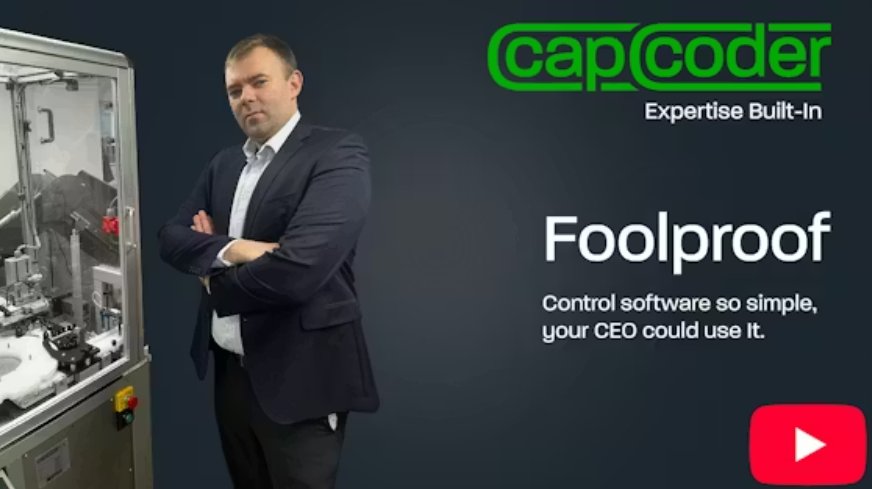
With foolproof control software and Expertise Built-In, Cap Coder machines simplify operation, reduce errors, and give you complete confidence on the production line.
Prefer to see it in action?
Watch how our intuitive control software performs on a real production line, and hear directly from customers who’ve reduced training time, cut errors, and taken back control of their processes.
Ready to Boost your Productivity?
Get in touch today and one of our friendly sales engineers will be in contact shortly.